
Google Gemini Is No Longer Just a Chatbot — It Is Quietly Becoming Android’s Brain
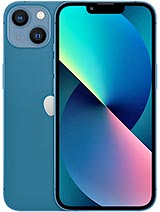
Apple iPhone 13
There is a moment when you stop using a tool and start relying on it. That moment, for many Android users, may have already arrived with Google Gemini — whether they noticed or not.
Gemini did not announce a takeover. There was no dramatic rebrand, no single update that flipped a switch. What Google has been doing instead is quieter and arguably smarter: layering Gemini into the parts of Android people use every day, until the assistant is no longer something you open — it is something that is simply always there.
The shift became undeniable when Google hosted The Android Show: I/O Edition in May 2026. What the company announced was not a feature list. It was a philosophy change. Google formally introduced Gemini Intelligence — an umbrella for AI capabilities that now span Android phones, Wear OS watches, Android Auto, XR glasses, Chrome, and even a new category of AI-first laptops called Googlebooks. The message was deliberate: Android is transitioning from an operating system into an intelligence system.
Personal Intelligence Changes Everything
The foundation of all of this is what Google calls Personal Intelligence. In practice, Gemini finally has memory — not just session-level recall, but persistent awareness of your past conversations, your habits, your projects, and your preferred way of working. If you told Gemini last week that you are working on a product launch, it remembers next time you ask a related question. If you referenced a vendor by name three days ago, Gemini pulls that context forward without you repeating yourself.
This sounds like a small thing. It is not. Every AI assistant before this essentially had amnesia between sessions. You carried all the context yourself, restating it every time. Personal Intelligence removes that friction, and the result is that Gemini starts feeling less like a search tool and more like a colleague who was in the room for every previous conversation.
The extensions are what give that memory actual reach. Once connected, the app-switching habit starts to break down. You no longer open Gmail to find an email — you ask Gemini what that vendor said last Tuesday, and it reads the email and gives you the relevant sentence. The apps become background infrastructure. Gemini becomes the front-facing interface.
What Gemini Can Actually Do Right Now
The feature set is broader than most people realize. Here is what is already live or confirmed for the summer 2026 rollout:
- Scheduled Actions — automated recurring workflows, like a morning briefing that pulls calendar events, task summaries, and weather at 8 AM without you asking.
- Cross-app extensions — Gmail, Calendar, Tasks, Keep, YouTube Music, WhatsApp, Spotify, and device Utilities are all connectable from a single Gemini thread.
- Rambler — speak naturally in mixed languages, including Urdu-English code-switching, and Gemini converts it into a clean, polished message automatically.
- Gemini in Chrome — summarizes web pages, compares content across tabs, and fills complex forms using personal data from your connected Google apps.
- Create My Widget — describe what you want on your home screen in plain language and Gemini builds the widget. No developer knowledge needed.
- Intelligent Autofill — Gemini reads your connected apps to fill forms across Android and Chrome, including pulling document data from Google Wallet.
Scheduled Actions are probably the most underrated item on that list. These are not reminders. They are actual automated workflows running on a schedule inside your phone — the gap between this and a personal automation platform is narrowing fast.
Rambler deserves a separate mention for Pakistani users specifically. It is built on Gemini’s multilingual model with explicit support for code-switching between English and South Asian languages. For anyone who thinks in Urdu and writes in English professionally — which describes most Pakistani knowledge workers — this handles the translation layer between how you actually think and how formal communication expects you to write.
The Honest Limitations
The ambition is clear, the early features are genuinely useful, but this is not arriving for everyone at the same time. Gemini Intelligence launches first on Samsung Galaxy S26 and Google Pixel 10 this summer, with broader Android availability later in 2026. For Pakistani users, that creates a familiar problem. Flagship devices that get these features first cost between Rs. 350,000 and Rs. 500,000 after PTA taxes. The mid-range phones most people actually buy — Galaxy A-series, Xiaomi Redmi, Tecno Camon — will receive these features later, if at all, depending on manufacturer and Android version support.
Third-party app support is also a real gap. The current integrations are almost entirely Google’s own ecosystem. OneDrive, Canva, Adobe, Notion, and most productivity tools people rely on in professional settings are not there yet. For Gemini to truly function as a productivity OS rather than a productivity layer on top of Google’s own apps, that third-party coverage needs to deepen substantially.
Privacy is the other conversation worth having. Gemini Intelligence having access to your Gmail, your documents in Google Wallet, your Keep notes, and your calendar simultaneously is a significant level of access. Google states that multi-step automation is strictly opt-in and that Gemini only acts when explicitly told to. But the architecture — an AI system with broad read access across your digital life — deserves scrutiny. The convenience is real. So is the data exposure. Users should understand what they are enabling before connecting everything.
Where This Leaves Android in 2026
Apple’s iOS 26 introduced its own intelligence layer alongside the Liquid Glass redesign — deeper Siri integration, on-device AI processing, and expanded cross-app awareness. Apple’s approach is more conservative about third-party access and more privacy-focused by design. But the destination is the same: a phone that does things instead of showing you things to do. Both companies are building toward an AI layer that handles the interface on your behalf. The race is genuinely open.
Samsung, Xiaomi, and OPPO are watching closely. One UI has added AI features steadily, and Samsung’s Galaxy S26 is among the first to receive Gemini Intelligence. Xiaomi’s HyperOS and OPPO’s ColorOS have been adding AI at the system level too, though none yet approach the depth of cross-app integration Gemini is building toward.
For Pakistani users already on a Pixel or recent Samsung flagship, the features worth enabling immediately are Personal Intelligence with Gmail and Calendar extensions, Scheduled Actions for a morning briefing, and Rambler for WhatsApp drafting in mixed language. Those three alone replace several apps’ worth of manual daily effort.
Android is not an OS with an AI assistant anymore. The assistant is becoming the OS. That happened quietly, and most people have not finished noticing yet.
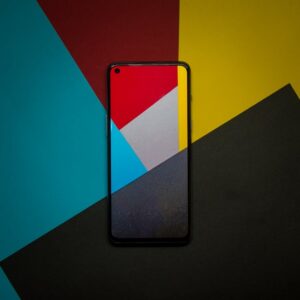
Samsung Galaxy A26 5G

About Quraat ul Ain
Editor - Research & Academic Technology Contributor Quraat ul Ain brings an academic and research-driven perspective to PakistaniLiving (PL), specializing in emerging technologies, digital ecosystems, AI trends, mobile platforms, and consumer technology behavior. With a background in higher education and technology research, she contributes analytical articles that simplify complex innovations into accessible insights for everyday readers. Her writing bridges academia and the fast-moving gadget industry, offering balanced, evidence-based coverage tailored for Pakistan’s growing tech audience.