
Lenovo’s Legion – 8,000mAh Battery

Samsung Galaxy A26 5G
Lenovo quietly exited the smartphone business in 2023. No announcement, no farewell — a spokesperson told Android Authority the company was stopping its Android-based Legion gaming phones, and that was that. Two and a half years later, Lenovo is back with the Legion Y70 (2026), launched in China on May 19, and the specs are genuinely hard to ignore.
Four years is a long time in mobile. The last Legion phone, the Y70 from 2022, ran a Snapdragon 8+ Gen 1 and packed a 5,100mAh battery with 68W charging. The 2026 version doubles down on practically everything: 8,000mAh battery, 90W charging, Snapdragon 8 Gen 5, a 2K AMOLED display with 7,000 nits peak brightness, and a 5,500mm² vapor chamber to keep temperatures from killing performance during PUBG Mobile marathons. For mobile gamers in Pakistan who have been waiting for a phone that takes battery life seriously, this is the phone the market has been missing.
- What the Specs Actually Mean
Start with the battery because it defines the phone. 8,000mAh is not common — the previous record holder in mainstream gaming phones was around 6,500mAh, and most flagships including the Samsung Galaxy S26 Ultra sit at 5,000mAh. Lenovo is claiming two full days of use on a charge, and even if real-world use trims that to 1.5 days, it changes the experience for Pakistani gamers dealing with load shedding. 90W wired charging with bypass charging support means you can game plugged in without cycling the battery — the phone draws power directly from the charger rather than charging and discharging the cell simultaneously, which reduces heat and extends long-term battery health. Lenovo says the battery is rated for 1,200 charge cycles with 80% capacity retention — that is roughly seven years of use.
The Snapdragon 8 Gen 5 is Qualcomm’s latest, built on TSMC’s 3nm process. A Geekbench listing attributed to this phone showed single-core scores of 2,615 and multi-core of 6,681 — competitive with anything available in 2026. Paired with LPDDR5X Ultra RAM running at 9,600Mbps and UFS 4.1 storage, the hardware pipeline from storage to processor to display is as fast as current mobile silicon gets. The 5,500mm² vapor chamber drops CPU core temperatures by up to 7°C under sustained load — a spec that matters in Multan and Rahim Yar Khan summers where phones throttle aggressively.
The 6.82-inch Q10 AMOLED LTPO display runs from 1Hz to 144Hz adaptively and hits 2K resolution at 510 PPI. The 7,000-nit peak brightness is the headline that will generate debate — most reviewers correctly note that 7,000 nits is achievable only in specific HDR scenarios, not sustained typical brightness. But even at 2,100 nits global brightness, this is among the most readable outdoor displays in any phone on the market. Dolby Vision, full DC dimming, and a 360Hz touch sampling rate round out the panel. That touch sampling rate — how quickly the display detects and registers touches — matters more for competitive gaming than the refresh rate itself.
- The Camera, Build, and Software
Gaming phones have historically treated cameras as afterthoughts. Lenovo made a different call here. The main camera uses a Sony LYT-710 50MP sensor with OIS — the same sensor family in mid-to-high-end flagships. An 8MP ultrawide and a 2-in-1 auxiliary sensor complete the rear setup. A 32MP front camera handles selfies and video calls. This is not a camera phone competing with the Pixel 9 Pro or the vivo X200T, but it is a competent main shooter that will not embarrass you in daylight — which is more than most gaming phones of the past delivered.
Build quality impresses on paper: aerospace-grade aluminum frame, a textured “fine crystal sand” glass back, and an IP66/IP68/IP69 triple certification that covers dust, water immersion, and high-pressure water jets. That triple IP rating is unusual even among flagship-tier phones. The ergonomic design places the camera module deliberately off-center to avoid interference when holding the phone in landscape orientation during gaming — a practical detail that gaming phone buyers will appreciate immediately.
Wi-Fi 7, Bluetooth 6.0, dual eSIM support, NFC, and a USB-C port with DisplayPort output round out the connectivity. No 3.5mm jack, which will frustrate some users. Software ships as stock Android with a Lenovo Legion gaming layer — not confirmed whether it will receive multi-year update commitments comparable to Samsung or Google.
- The PC Connectivity Feature Nobody Is Talking About Enough
Buried in the spec sheet is the most interesting feature of the Legion Y70 (2026): it can connect to a Lenovo Legion PC and use the computer’s GPU to play AAA PC games on the phone. If this works as described, it is a meaningful differentiator — not just a gaming phone but a remote rendering terminal for Lenovo’s PC gaming ecosystem. The practical implementation depends entirely on how well Lenovo’s software executes this, and no independent hands-on has confirmed it works without latency issues. But the concept is the right direction for a brand that owns both the phone and the PC hardware.
Price and the Pakistan Reality
The Legion Y70 (2026) launched in China at four configurations:
- 12GB + 256GB — CNY 2,599 (approximately USD 382 / Rs. 106,000 at current rate)
- 12GB + 512GB — CNY 3,199 (approximately USD 470 / Rs. 130,500)
- 16GB + 512GB — CNY 3,599 (approximately USD 529 / Rs. 146,500)
- 16GB + 1TB — CNY 4,399 (approximately USD 646 / Rs. 179,000)
Retail sales in China begin June 9. Global availability — including India, Pakistan, or any other South Asian market — has not been confirmed. PhoneArena called a US release “totally out of the question” and European availability “highly unlikely.” Pakistan sits in the same grey zone: no official Lenovo smartphone distribution exists here, and the 2022 Legion Y70’s Pakistan price through grey channels was approximately Rs. 94,999 — significantly below its hardware value at the time.
If the pattern holds, grey-market units of the 12GB/256GB Legion Y70 (2026) would likely land in Hafeez Centre and on Daraz between Rs. 110,000–130,000 after import. PTA registration on CNIC adds Rs. 50,000–70,000 on top of that, pushing total landed cost to Rs. 160,000–200,000 for the base variant. At that price, it competes directly against the OnePlus 13 and approaches Samsung Galaxy S25 territory — both phones with stronger software ecosystems, local service networks, and established resale value in Pakistan.
- Who Should Be Paying Attention
Pakistani mobile gamers have been poorly served for years. The gaming phone segment essentially collapsed after Asus stopped updating the ROG Phone line meaningfully, and RedMagic has only limited grey-market penetration here. The Legion Y70 (2026) addresses the actual pain points: battery that does not die during a three-hour gaming session, thermals that do not throttle the chip after twenty minutes, and a display bright enough to see during outdoor use. At the China price, this phone is outstanding value. At Pakistan grey-market prices with PTA costs factored in, it becomes a harder sell against phones with actual warranty coverage and local service.
If you are a heavy mobile gamer who churns through two phone charges a day during load shedding, this battery alone might justify the import process. If you want a warranty you can actually use, or a camera that competes with the vivo V40 or Redmi Note 14 Pro, look elsewhere. Lenovo built the right phone for a specific type of user — just not for the typical Pakistani buyer who needs a daily driver that does everything adequately. The Legion Y70 (2026) does gaming exceptionally and everything else adequately. Whether that trade-off is worth it depends entirely on what you spend your screen time doing.
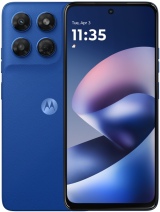
Moto G37

About Luqman
A passionate technology writer and digital researcher,Luqman specializes in simplifying complex tech trends into practical, user-focused insights. With a strong interest in smartphones, emerging gadgets, and digital ecosystems, Luqman delivers well-researched, unbiased content tailored for everyday users. From product deep-dives to buying guides, the goal is simple: help readers make smarter, more informed decisions in a fast-changing tech landscape.