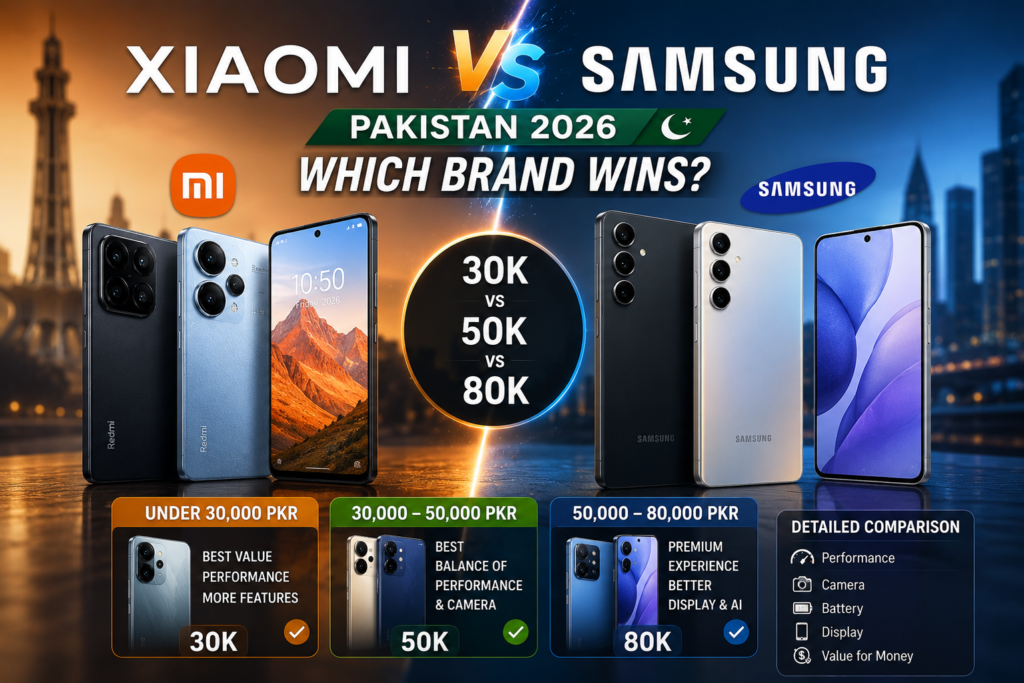
Xiaomi vs Samsung Pakistan 2026: Which Brand Wins at 30k, 50k and 80k?
vivo X200T
The Brand Battle That Every Pakistani Buyer Faces
Walk into any mobile market in Hafeez Centre Lahore or Saddar Karachi and you will hear the same argument playing out at every counter: Xiaomi or Samsung? Both brands dominate the shelves. Both have loyal buyers who will argue passionately for their side. And both have made serious moves in Pakistan over the past two years, with newer models, revised PKR pricing, and growing after-sales networks.
But loyalty does not pay your phone bill. The question is which brand actually gives a Pakistani buyer better value in 2026, whether you are shopping with PKR 30,000, PKR 50,000, or PKR 80,000 in your pocket. This article breaks down the comparison across price brackets, after-sales service, PTA status, resale value on OLX, and the day-to-day realities of using either brand in a city where load shedding is still a factor.
One important note before we begin: every price cited here is the official PTA-approved, duty-paid market price. Grey-market figures are mentioned separately where relevant.
Brand Reputation and Market Position in Pakistan
Samsung has been selling phones in Pakistan since the early feature-phone era. It has authorised service centres in Karachi, Lahore, Islamabad, Faisalabad, Multan, and dozens of smaller cities. When something goes wrong, you can walk into a Samsung Service Plaza and get a warranty claim processed without an argument. That infrastructure matters in a country where courier-based service can be unreliable.
Xiaomi entered Pakistan aggressively through the Redmi sub-brand, targeting buyers who wanted flagship-adjacent specs at budget prices. The brand has grown significantly but its official after-sales network is thinner than Samsung’s. Many Xiaomi repairs in smaller cities still go through third-party technicians, which can void warranties and introduce counterfeit parts.
Samsung also benefits from stronger brand recognition among first-time smartphone buyers in Tier 2 and Tier 3 cities like Gujranwala, Sialkot, and Bahawalpur. Xiaomi’s reputation is strongest among tech-aware buyers in urban centres who actively follow spec sheets.
Price Bracket Comparison: Which Brand Wins at Each Level?
Under PKR 40,000: The Entry-Level Fight
This is Xiaomi’s strongest territory. The Redmi 13 and Redmi 13C series sit comfortably below PKR 40,000 and offer larger batteries, higher-resolution displays, and faster charging than Samsung’s equivalent options in the same range.
Samsung’s entry-level lineup includes the Samsung Galaxy A05 at PKR 39,999 and the Samsung Galaxy A05s at PKR 39,999. Both are honest, functional phones with solid build quality and Samsung’s software support. The Samsung Galaxy A14 at PKR 39,999 steps things up slightly with a better processor and display, and the Samsung Galaxy A15 at PKR 39,999 adds a 90Hz display to the package.
In raw specs, Xiaomi wins this bracket. But Samsung wins on after-sales confidence and software update longevity. For a buyer in Lahore who wants peace of mind with a warranty that is actually honoured, Samsung makes sense. For a buyer in a smaller city who wants the best screen and battery for the money and is comfortable with third-party repairs, Xiaomi is the better hardware bet.
PKR 40,000 to PKR 60,000: The Mid-Range Sweet Spot
This is where the competition gets genuinely interesting. Xiaomi’s Redmi Note 13 Pro and the POCO X6 series occupy this space with AMOLED displays, 67W fast charging, and capable cameras. Samsung responds with models like the Samsung Galaxy A15 at the lower end and moves up through the A-series lineup.
The Samsung Galaxy A26 5G at PKR 94,999 sits above this bracket, but for buyers stretching toward the upper edge of PKR 60,000, Samsung’s mid-range phones offer consistent camera performance and One UI’s well-regarded software experience. Xiaomi’s MIUI or HyperOS divides opinion in Pakistan: some buyers love the customisation, others find it bloated with ads in the default apps on budget models.
Battery life in this bracket is critical for Pakistani users dealing with load shedding. A phone that dies at 4pm because the office lost power at 2pm is a genuine problem. Xiaomi’s 5,000mAh batteries combined with 67W charging give a meaningful advantage here. Samsung’s comparable models often charge more slowly, though Samsung’s battery optimisation algorithms are generally more conservative and extend cycle life.
PKR 70,000 to PKR 100,000: Where Samsung Pulls Ahead
Above PKR 70,000, the dynamic shifts. Samsung’s build quality, camera processing, and software polish become more apparent. The Samsung Galaxy A26 5G at PKR 94,999 brings a 50MP OIS camera and a 120Hz AMOLED display to a price point where Xiaomi is competing with phones that may not have the same level of camera stabilisation or long-term software support.
OIS (optical image stabilisation) matters in real-world Pakistan use: capturing photos at a wedding in dim lighting, shooting video while walking, or photographing documents. Xiaomi phones in this range sometimes offer EIS instead of OIS, which is a software-based solution and noticeably less effective.
Samsung also offers four years of OS updates and five years of security patches on its A-series phones from this price point upward. That is a genuine long-term value argument. Xiaomi’s update policy for its mid-range lineup has historically been two to three major OS versions, which is acceptable but not exceptional.
Head-to-Head Comparison Table
| Factor | Xiaomi | Samsung |
|---|---|---|
| Entry-level specs (under 40k) | Better raw hardware value | More conservative specs |
| Mid-range (40k-60k) | Stronger display and charging | Better software experience |
| Upper mid-range (70k-100k) | Competitive but inconsistent | OIS cameras, longer updates |
| After-sales service | Limited official centres | Nationwide service plazas |
| PTA-approved availability | Available, patchy official stock | Widely available officially |
| Software update years | 2-3 major versions (budget) | 4 years OS, 5 years security |
| OLX resale value | Drops faster | Holds value better |
| Battery and charging speed | Typically faster charging | Slower but optimised |
| Build quality (upper mid) | Good but variable | Consistent and premium feel |
| Price transparency | Grey market pricing common | Official pricing more stable |
After-Sales Service: The Reality on the Ground
This is one area where the two brands are not close. Samsung Pakistan operates authorised service centres in every major city and in many Tier 2 cities. If you buy a Samsung phone from an official retailer in Islamabad and the screen develops a fault within warranty, you take it to the Samsung Service Plaza, show your proof of purchase, and the process is straightforward.
Xiaomi’s official service situation in Pakistan has improved but remains patchy outside Karachi and Lahore. In cities like Peshawar, Quetta, or even mid-sized Punjab cities, getting an official Xiaomi warranty claim processed often means sending the phone to a larger city or trusting an unofficial repair shop. That is a meaningful risk on a PKR 40,000 to PKR 60,000 purchase.
For buyers considering accessories alongside their phone, Samsung’s ecosystem is also more accessible in Pakistan. The Samsung Galaxy Buds 2 Pro and related audio products are available through official channels, whereas Xiaomi accessories are more frequently sourced through grey-market imports or Daraz listings from unofficial sellers.
PTA Status, Grey Market and What It Means for You
Every phone used on a Pakistani SIM must be registered with the Pakistan Telecommunication Authority. Phones that are not PTA-approved will be blocked from cellular networks after a grace period. Both Samsung and Xiaomi phones are available in Pakistan in PTA-approved and non-approved (grey market) versions.
Samsung’s official channel means the phone you buy at a Samsung-authorised dealer almost certainly comes pre-approved and carries a local warranty. Xiaomi’s distribution has historically been less tightly controlled, meaning a significant proportion of Xiaomi phones sold in Pakistan — particularly on Daraz or in smaller markets — are grey-market imports. These phones may or may not be PTA-registered, and the seller may offer PTA approval as a paid add-on.
Grey-market Xiaomi phones are often PKR 5,000 to PKR 15,000 cheaper than official versions but come without a valid warranty and may have compatibility issues with Pakistani network bands. If you are buying a Xiaomi phone, verify the IMEI on the PTA Device Identification, Registration and Blocking System (DIRBS) portal before completing any purchase. With Samsung bought from an authorised retailer, this check is less critical but still good practice.
OLX Resale Value: Which Brand Holds Up Better
Pakistani buyers, particularly in Lahore and Karachi, treat their phones as assets that will be traded or sold within one to two years. Resale value is therefore a real financial consideration, not just a secondary concern.
Samsung phones consistently hold their value better on OLX. A Samsung Galaxy A-series phone bought at PKR 50,000 will typically fetch PKR 32,000 to PKR 38,000 after 12 months of use, assuming good condition. An equivalent Xiaomi Redmi or POCO model bought at the same price may sell for PKR 25,000 to PKR 30,000 in the same timeframe.
The difference comes down to buyer confidence. Most OLX buyers in Pakistan are not tech-savvy enough to evaluate a Xiaomi phone’s specs with the same certainty they apply to a Samsung. Samsung’s brand recognition creates a liquidity premium. If you plan to sell your phone within a year or two, factor this gap into your total cost of ownership calculation.
Pakistan Buying Guide: Where to Buy and What to Watch For
For Samsung phones, the safest purchase points are Samsung Experience Stores, authorised dealers listed on Samsung Pakistan’s website, and well-established mobile market shops in Hafeez Centre Lahore or Hall Road. Daraz also sells Samsung phones through the Samsung official store, which carries the manufacturer warranty.
For Xiaomi, the risk of receiving a grey-market unit is higher. The safest options are the official Xiaomi Pakistan store on Daraz, Xiaomi’s own website if ordering directly, or well-reviewed Daraz sellers with high ratings and return policies. In physical markets, ask explicitly whether the phone is PTA-approved and request a DIRBS check on the spot. Some sellers at Hafeez Centre will carry out this check willingly; be cautious about those who resist.
Also consider the impact of load shedding on your purchasing decision. If you are in a city with eight or more hours of daily load shedding, a phone with a large battery and fast charging is not a luxury — it is a necessity. Xiaomi models in the PKR 30,000 to PKR 50,000 range generally offer better battery-to-price ratios than Samsung equivalents. A phone that can go from zero to 50 percent in 30 minutes using a Xiaomi 67W charger is more practical than one that takes 90 minutes on a Samsung 15W brick.
For buyers who want Samsung’s reliability but also need fast charging, look at the Samsung A55, which supports 45W charging, or the Galaxy A26 5G at PKR 94,999. These models close the charging speed gap considerably.
Bottom Line: Which Brand Should You Buy in 2026?
The honest answer is that neither brand wins outright. The right choice depends on your budget, your city, and how long you plan to keep the phone.
Buy Xiaomi if you are spending under PKR 50,000, you live in Karachi or Lahore where third-party service is accessible, you deal with heavy load shedding and need fast charging, and you are comfortable verifying PTA status yourself before purchase. You will get more battery, faster charging, and often a sharper display for your money.
Buy Samsung if you are spending above PKR 60,000, you live outside the two largest cities, you want a phone that holds resale value on OLX, you need reliable warranty service, or you want four or more years of software updates. The Samsung Galaxy A26 5G at PKR 94,999 is the strongest single recommendation in the mid-to-upper range: OIS camera, 120Hz AMOLED, 5G readiness, and a warranty that is actually enforceable.
For first-time smartphone buyers in smaller cities — Gujranwala, Sialkot, Sargodha — Samsung is the safer default. The service network and brand recognition alone justify a small price premium over a Xiaomi alternative. For a Lahore student buying their second phone and planning to sell it in a year, Xiaomi at PKR 35,000 to PKR 45,000 offers better hardware per rupee.
Neither brand is a bad choice. But knowing which one suits your situation will save you money and frustration in 2026.
Frequently Asked Questions
Is Xiaomi officially available in Pakistan with PTA approval?
Yes, Xiaomi phones sold through the official Xiaomi Pakistan store on Daraz and authorised dealers come PTA-approved. However, a large share of Xiaomi phones in physical markets are grey-market imports. Always check the IMEI on the PTA DIRBS portal before buying any Xiaomi phone from a physical shop or an unofficial online seller.
Does Samsung have better after-sales service than Xiaomi in Pakistan?
Yes, significantly. Samsung operates authorised service centres in Karachi, Lahore, Islamabad, Faisalabad, Multan, and many smaller cities. Xiaomi’s official service network is concentrated in the two largest cities. Outside Karachi and Lahore, Xiaomi warranty claims typically require the buyer to travel to a larger city or use unofficial repair services.
Which brand is better for buyers dealing with load shedding in Pakistan?
Xiaomi phones in the PKR 30,000 to PKR 60,000 range generally offer larger batteries and significantly faster charging — often 67W versus Samsung’s 15W to 25W in the same price range. For buyers in cities with extended daily load shedding, this charging speed advantage is practical. Samsung narrows this gap at the PKR 70,000 and above bracket with 45W charging on select models.
Which brand holds resale value better on OLX in Pakistan?
Samsung holds resale value better than Xiaomi on OLX, based on consistent market observations in Lahore and Karachi. Samsung’s stronger brand recognition among general buyers creates a liquidity advantage. A Samsung phone bought at PKR 50,000 will typically fetch a higher price after 12 months than an equivalent Xiaomi model purchased at the same price. If resale is a factor in your decision, Samsung is the better long-term financial choice.
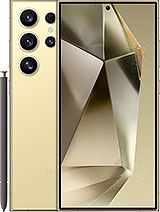
Samsung Galaxy S24 Ultra

About Ayesha
Editor: Industry & Consumer Tech Specialist - Ayesha is a Pakistani tech editor and gadget analyst with years of experience covering smartphones, wearables, laptops, and consumer electronics for digital audiences across South Asia. At PakistaniLiving (PL), she focuses on real-world gadget reviews, buying guides, PTA and pricing trends, battery performance, camera testing, and practical usability for Pakistani consumers. Her work combines industry awareness with an everyday user perspective, helping readers make smarter technology decisions without unnecessary technical jargon.