
The Evolution of the Mid-Range Smartphone: Navigating the 2024 Mobile Ecosystem
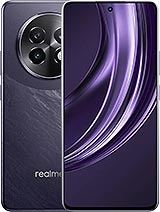
The mobile device landscape is undergoing a seismic shift. No longer is the ‘premium’ experience reserved solely for flagship devices costing upwards of a thousand dollars. As we move deeper into the current hardware cycle, the lines between high-end performance and mid-range affordability have blurred, creating a hyper-competitive market for consumers looking for the best bang for their buck.
Understanding the Mobile Architecture: SoC, RAM, and Refresh Rates
At the heart of every modern smartphone lies the System on a Chip (SoC). Whether it’s a Snapdragon, Dimensity, or Samsung’s proprietary Exynos silicon, the efficiency of these chips determines everything from battery longevity to the smoothness of the UI (User Interface). Modern mobile apps are becoming increasingly resource-heavy, demanding more from the CPU (Central Processing Unit) and GPU (Graphics Processing Unit). For users who multitask, having at least 8GB of RAM (Random Access Memory) has become the industry standard for a lag-free experience.
Furthermore, the display technology has seen a massive leap. We have moved from basic LCD panels to high-refresh-rate AMOLED and Super AMOLED screens. A 120Hz refresh rate ensures that scrolling through social media feeds or playing high-intensity mobile games feels fluid. If you are currently looking at options like the Samsung Galaxy A57 alternatives, you’ll notice that display quality is often the deciding factor in this segment.
The Software Ecosystem: Android Skins and Bloatware
Hardware is only half the story. The software experience—often referred to as the ‘Skin’ or ‘ROM’—defines how we interact with our devices. Samsung’s One UI, Xiaomi’s HyperOS, and Google’s Pixel UI offer different takes on the Android operating system. One critical term every mobile user should know is ‘Bloatware’—the pre-installed apps that often occupy storage and consume background data. Choosing a device with a ‘Clean’ OS often leads to better long-term performance and faster security patch updates.
Mobile app development has also pivoted towards ‘Progressive Web Apps’ (PWAs) and ‘Instant Apps,’ which allow users to experience software without a full installation from the Play Store. This helps save internal storage, which is vital for users on devices with 128GB or 256GB capacities.
Camera Technology: Beyond Megapixels
Marketing departments love to shout about 108MP or 200MP sensors, but in the mobile world, sensor size and ‘Pixel Binning’ are more important. Pixel binning combines data from multiple small pixels into one ‘super pixel’ to improve low-light performance, a feature Samsung calls ‘Nightography.’ Computational photography, driven by AI (Artificial Intelligence) ISPs (Image Signal Processors), now does the heavy lifting, adjusting HDR (High Dynamic Range) and portrait bokeh in real-time.
Deep Dive: Regional Availability and Device Comparisons
For those residing in specific markets, local pricing and availability are the ultimate hurdles. If you are searching for the latest price updates and local specifications, you should check out the comprehensive database of single phone pages. This resource is essential for comparing the ‘Global’ version of a phone versus the ‘Indian’ or ‘Chinese’ variants, which often differ in LTE/5G band support and charging speeds.
Connectivity: 5G, Wi-Fi 6E, and eSIM
The transition to 5G is nearly complete in the mid-range sector. However, not all 5G is equal. Sub-6GHz offers broader coverage, while mmWave (mostly in the US) offers blistering speeds. We are also seeing the rise of eSIM (embedded SIM) technology, which allows users to switch carriers without a physical plastic card. This is a game-changer for international travelers who can now download data plans on the fly.
The Future: Folding Displays and AI Integration
The next frontier is foldable technology. Devices like the Z Fold and Z Flip series are moving from niche novelties to mainstream contenders. Coupled with on-device AI—which allows for real-time translation and advanced photo editing without an internet connection—the mobile device is evolving into a true pocket-sized workstation.
Conclusion
Whether you are looking at the upcoming Galaxy A-series or exploring the vast array of mobile devices currently on the market, understanding terms like Nits (brightness), IP68 (water resistance), and UFS 3.1 (storage speed) will help you make an informed decision. The ‘King of the Mid-Range’ is no longer a single crown, but a title fought for by dozens of high-quality devices.

About pakliv
Tech enthusiast and editor at PakistaniLiving. Loving everything about mobile technology and the telecom industry in Pakistan.