The Evolution of the Mid-Range Smartphone: Navigating the 2026 Mobile Ecosystem
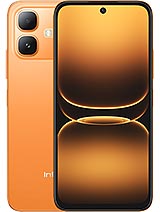
Infinix Smart 20
A mid-range phone now covers most of what a flagship did a few years ago. The gap in screens, chips and cameras has narrowed, and that matters in Pakistan, where buyers pay in PKR for phones that can cost far more once PTA tax or grey-market risk is counted. This guide explains the parts of a phone that decide whether a mid-range model is worth buying.
Understanding the Mobile Architecture: SoC, RAM, and Refresh Rates
At the heart of every modern smartphone lies the System on a Chip (SoC). Whether it is a Snapdragon, Dimensity or Samsung’s Exynos, the chip affects battery life and how smooth the interface feels. Modern apps demand more from the CPU (Central Processing Unit) and GPU (Graphics Processing Unit), and for people who multitask, 8GB of RAM (Random Access Memory) is a comfortable floor for a lag-free experience. Heat matters too: in a Lahore or Multan summer, a chip that slows down under load can feel worse than a slightly slower chip that holds its speed, so reviews that test sustained performance tell you more than a single benchmark score.
Display technology has also moved on. Basic LCD panels have given way to high-refresh-rate AMOLED and Super AMOLED screens. A 120Hz refresh rate makes scrolling and gaming feel smoother, though it uses more battery, which counts when load shedding means you top up from a power bank. If you are looking at options like the Samsung Galaxy A57 alternatives, display quality is often the deciding factor in this segment.
The Software Ecosystem: Android Skins and Bloatware
Hardware is only half the story. The software, often called the skin or ROM, defines how you use the phone. Samsung’s One UI, Xiaomi’s HyperOS and Google’s Pixel UI each take a different approach to Android. One term worth knowing is bloatware: the pre-installed apps that take up storage and use background data. A phone with a cleaner skin often keeps its speed longer and gets security patches sooner, so check the software version on any used or grey-market phone before you pay.
Storage is the quieter cost. Many mid-range phones start at 128GB, and WhatsApp media, downloaded videos and games fill it quickly. Some mid-range phones still have a microSD slot, but many do not, so read the spec sheet and buy the storage size you will actually need.
Camera Technology: Beyond Megapixels
Marketing departments love to shout about 108MP or 200MP sensors, but sensor size and pixel binning matter more. Pixel binning combines data from several small pixels into one larger one to improve low-light photos, and Samsung markets its low-light processing as Nightography. Computational photography, run by AI image signal processors, now handles HDR (High Dynamic Range) and portrait blur in real time, which is why two phones with the same sensor can produce different photos.
Deep Dive: Regional Availability and Device Comparisons
For buyers in Pakistan, local pricing and PTA status are the biggest hurdles. If you are searching for specifications and local details, browse our single phone pages. They help you compare the global version of a phone with the Indian or Chinese variants, which can differ in 5G band support and charging speeds. Before you pay a dealer at Hafeez Centre or a seller on OLX, check whether the IMEI is PTA approved.
Connectivity: 5G, Wi-Fi 6E, and eSIM
Pakistan held its 5G spectrum auction in March 2026 and raised about $507 million, with Jazz buying 190 MHz, Ufone 180 MHz and Zong 110 MHz. Jazz and Zong launched 5G services in late March, starting with around 180 sites in Jazz’s case, and the report at that time said Ufone had not yet launched. So a 5G phone is worth having, but coverage still depends on your city and operator, and the phone must support the bands your operator uses. Sub-6GHz bands give broader coverage, while mmWave is mostly a US matter. eSIM is a separate question: local guides say Jazz, Zong and Ufone offer eSIMs with biometric verification and a PTA-registered IMEI, and that an eSIM counts towards the five-SIM limit per CNIC. Check your operator’s own page for fees and which phones it supports.
The Future: Folding Displays and AI Integration
The next frontier is foldable phones. Models like the Galaxy Z Fold and Z Flip series are still a premium choice in Pakistan, while on-device AI features such as live translation and photo editing are appearing on more phones and work without an internet connection.
Conclusion
Whether you are looking at a Galaxy A-series phone or exploring the range of mobile devices on our phone pages, understanding terms like nits (brightness), IP68 (water resistance) and UFS 3.1 (storage speed) will help you compare phones properly. There is no single best mid-range phone in Pakistan. The right one depends on your budget in PKR, your city’s 5G coverage, and whether the PTA status is clean.