
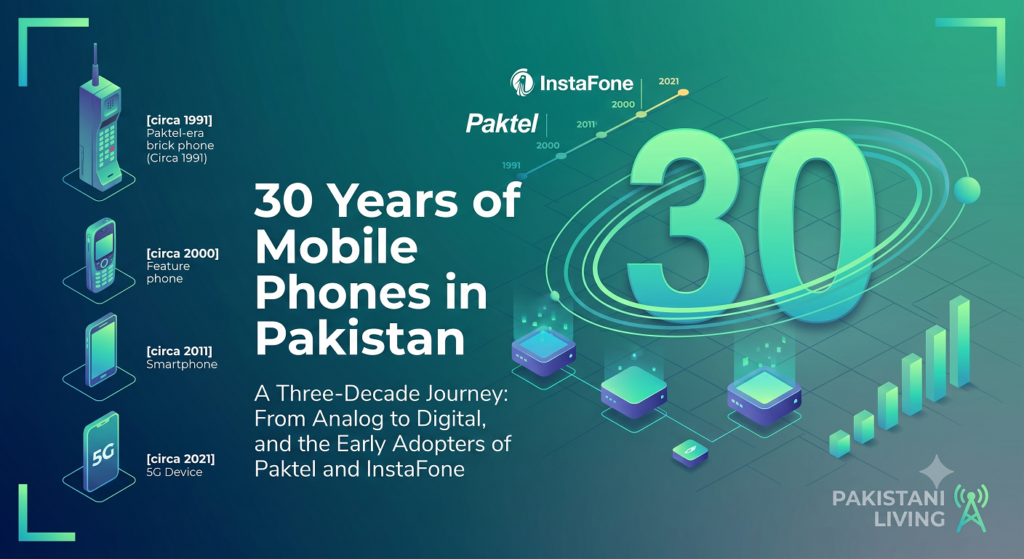
30 Years of Mobile Phones in Pakistan
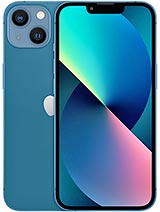
Apple iPhone 13
30 Years of Mobile Phones in Pakistan: From the First Nokia to the Age of Chinese Smartphones
In 1994 a mobile phone in Pakistan was the size of a brick, cost more than a car engine, and could make calls in only two cities. In 2026 your Rs. 20,000 Android phone has more computing power than NASA used to land on the moon. This is the full story of how Pakistani mobile hardware evolved — decade by decade, handset by handset, and brand by brand — and what each shift meant for the people who bought, used, and repaired them.
Era 1 — The Brick Phone Age
1994 – 2001
The First Mobile Phones: Luxury Objects (1994–2000)
Pakistan’s first commercial mobile phones were analogue AMPS devices that bore little resemblance to what the word “phone” means today. The Motorola DynaTAC and its contemporaries — large, heavy handsets with external antennas, carried in belt holsters or placed on car dashboards — were engineering achievements of the early 1990s now in the hands of Pakistan’s first mobile network subscribers.
These phones were not purchased at a shop. They were obtained through the mobile operator directly, often as part of a business account arrangement. The handset cost Rs. 40,000–80,000 in an era when a government employee’s monthly salary was Rs. 3,000–5,000. They were objects of status precisely because they were inaccessible. Seeing a mobile phone in Karachi’s business districts in 1995 was like seeing a private driver — it told you something specific about the person holding it.
Call quality was variable. Coverage was limited to Karachi and Lahore on Mobilink’s initial network. The battery, by the standards of what came later, was enormous — a large removable block that still lasted only a few hours of talk time. The phone was permanently tethered to its charger in most uses.
For Pakistani culture, this era is largely invisible. The mobile phone of 1994–2000 touched too few lives to leave a cultural imprint. Its significance is historical: Pakistan had a commercial mobile network, and a small number of Pakistanis were on it, before the digital revolution most Pakistanis remember had begun.
Era 2 — The Nokia Golden Age
2001 – 2009
Nokia: The Phone That Belonged to Everyone
No discussion of Pakistani mobile phone history can proceed without spending significant time on Nokia. The Finnish company’s dominance of Pakistan’s mobile market from roughly 2001 to 2009 was total. When Pakistanis of a certain age think of the word “mobile phone,” they think of a Nokia. Specifically, they think of a Nokia with a blue backlit screen, a predictive text system called T9, and a ringtone that has been described as the most recognised piece of audio in human history.
Nokia’s success in Pakistan was not accidental. The company understood emerging markets better than its competitors. Where Motorola and Ericsson sold upmarket devices, Nokia built a product ladder — entry-level handsets that were genuinely affordable, mid-range devices that offered aspirational features, and premium Symbian smartphones for the professional class — that matched Pakistan’s income distribution almost perfectly.
The Nokia 3310: Friendship and Snake (2000–2003)
The Nokia 3310, released globally in 2000, was the phone that made mobile ownership feel possible for Pakistan’s educated urban middle class. At Rs. 6,000–8,000 in the early 2000s, it was not cheap — but it was the first mobile phone that someone who was not wealthy could realistically aspire to own.
The 3310’s cultural legacy in Pakistan is inseparable from Snake. Nokia’s pre-installed snake game — a simple pixel-art concept where a line grows as it eats dots — was, for millions of Pakistani users, their first experience of a video game on a personal device. University students played it between lectures. Office workers played it in quiet moments. Children played it on borrowed phones. The specific music of the Nokia 3310’s ringtones — particularly “Nokia Tune,” the adaptation of Francisco Tarrega’s Gran Vals — became the auditory signature of early 2000s Pakistani public life.
The 3310 was also the first phone that Pakistani users personalised. Interchangeable covers in different colours — yellow, orange, blue, transparent — were sold in mobile phone shops. Changing your cover was a statement of personality in the same way that a phone case sticker is today. The market for Nokia 3310 accessories in Karachi’s Hafeez Centre and Lahore’s Hall Road was active and commercially significant.
The Nokia 1100: The People’s Phone (2003–2008)
If the Nokia 3310 was the phone for the urban middle class, the Nokia 1100 was the phone for everyone else. Launched in 2003 at a price point that fell to Rs. 4,000–5,000 within its first year, the 1100 achieved something no mobile phone in Pakistan had previously managed: it reached the lower-middle income bracket at scale.
The Nokia 1100 became the world’s best-selling mobile phone ever — over 250 million units globally. Pakistan’s contribution to that figure was significant. The phone’s specific design choices were almost perfectly calibrated for Pakistani conditions: a torch (flashlight) built into the phone body for loadshedding, dust and splash resistance, a 55-hour standby battery that survived days without charging, and a volume loud enough to be heard above traffic, construction noise, and crowded markets.
The 1100 was also the device most associated with Pakistan’s missed call culture. Its loud ringtone (audible in a pocket above street noise), clear caller ID display, and simple call log made it the ideal tool for the one-ring communication system that defined Pakistani social life from 2003 to 2013. The phone was not designed for missed call culture; it was simply well-suited to it.
The Nokia 6600: The Aspiration Phone (2004–2007)
While the 1100 served the mass market, Nokia’s Symbian-based Series 60 devices served a different need: the aspiration of the professional class, the university student with a working father who wanted something beyond basic calling, the young executive who wanted to be seen with something that communicated ambition.
The Nokia 6600, launched in Pakistan at approximately Rs. 18,000–22,000 in 2004–2005, was the aspirational phone of its generation. It had a camera — the first time most Pakistani users had encountered a camera integrated into a mobile device. It ran Symbian OS, which meant it could run third-party applications. It had Bluetooth, allowing file sharing between phones in the same room. It could play polyphonic ringtones, MP3s, and — impractically on its small screen — video.
The Nokia 6600 was the phone on which Pakistani users first experienced: camera phones, MP3 music playback, Bluetooth file transfer, mobile internet (slow and expensive, but possible), and the early Symbian app ecosystem. It was the first smartphone that significant numbers of Pakistani users owned, though the word “smartphone” was not yet in common Pakistani usage.
The Nokia N-Series: Peak Nokia (2005–2009)
Nokia’s N-Series — the N70, N72, N73, N95, and their siblings — represented the peak of what Nokia could offer before the iPhone redefined the category. In Pakistan, the N-Series phones occupied the premium tier of the mobile market between 2005 and 2009, priced at Rs. 22,000–45,000 and carrying genuine prestige.
The Nokia N70, in particular, was significant in Pakistan. At Rs. 22,000–28,000 when it launched in 2006, it offered a 2-megapixel camera (remarkable at the time), full multimedia capabilities, Symbian OS, and the Nokia brand at its peak. University students who owned N70s were, in their social circles, displaying a kind of status. The phone appeared in Pakistani dramas and music videos of the period as a signifier of urban modernity.
The Nokia N95, launched in 2007 at Rs. 35,000–45,000, was Nokia’s technological masterpiece — a 5-megapixel camera, GPS navigation, Wi-Fi, and a dual-slide form factor. It was never affordable for most Pakistanis, but it circulated in certain professional and upper-class circles and established what “premium mobile” meant in the Pakistani market for years afterward.
Rs. 6,000–8,000 (2001–2003)
The urban middle-class breakthrough. Snake. Interchangeable covers. Nokia Tune. The phone that made mobile feel personal.
Rs. 4,000–5,500 (2003–2007)
The people’s phone. Built-in torch, 55-hour standby, dust-resistant. Best-selling phone in world history. The missed call era’s defining device.
Rs. 3,500–5,500 (2005–2008)
Mid-budget successors to the 1100. Added FM radio — the first time many Pakistani users could listen to radio on their phone. Hugely popular in semi-urban markets.
Rs. 18,000–22,000 (2004–2006)
First camera phone for the masses. Bluetooth file sharing, Symbian apps, MP3 ringtones. The aspiration phone of its generation.
Rs. 22,000–28,000 (2006–2008)
2MP camera, full Symbian, multimedia. Appeared in Pakistani dramas and music videos as the symbol of aspirational urban life.
Rs. 35,000–45,000 (2007–2009)
Nokia’s masterpiece. 5MP camera, GPS, Wi-Fi, dual-slide. Unaffordable for most but defined premium mobile for a generation.
Era 3 — The Disruption Years
2009 – 2014
The iPhone Arrives, Nokia Declines, and Samsung Finds Its Moment
The Apple iPhone launched in 2007 globally but was not an immediate force in Pakistan. At full price — $600–800 unsubsidised — and without local operator subsidies (Pakistan had no two-year contract model), the iPhone was a grey-import luxury item for Pakistan’s wealthiest users. But its existence forced every other handset maker to rethink what a phone should be, and that rethinking reached Pakistan’s market by 2010–2011.
Nokia’s response to the iPhone — the Nokia N97 (2009), Nokia X6 (2009), and eventually the Lumia Windows Phone series (2012) — was unsuccessful. Nokia’s Symbian operating system, which had been a technical achievement in 2004, looked dated against iOS and Android by 2010. The company’s internal politics delayed a decisive platform transition. By the time Nokia committed to Windows Phone, Android had won the mid-market globally.
Samsung recognised the Android opportunity before most. The Samsung Galaxy series, launched from 2010 onward, used Android’s openness to offer a complete smartphone ecosystem — apps, camera, internet, media — at a price ladder that ranged from Rs. 12,000 for the Galaxy Y to Rs. 60,000+ for the Galaxy S series. In Pakistan’s market, Samsung’s brand name carried established recognition (the company had sold consumer electronics — televisions, refrigerators — in Pakistan for years), and the Galaxy range benefited from that trust.
QMobile: Pakistan’s Own Phone Brand
QMobile’s emergence in 2009–2010 as Pakistan’s first mass-market domestic brand represents one of the more interesting chapters in Pakistani phone history. Founded by Zeeshan Akhtar, QMobile did not manufacture phones. It sourced handsets from Chinese ODM (Original Design Manufacturer) factories in Shenzhen — the same factories that built white-label devices for dozens of global brands — and sold them under Pakistani branding, with local warranty support and distribution.
The model worked because it understood Pakistan’s specific price sensitivity. Nokia had a floor: below a certain price, Nokia would not build the phone. Chinese ODMs had no such floor. QMobile’s Noir series of Android smartphones, launched from 2012 onward, offered Android at Rs. 6,000–10,000 — a price point that made touchscreen smartphones accessible to Pakistani buyers who had been locked out of the Nokia Symbian premium tier.
QMobile peaked at approximately 20–25% market share in 2013–2014. Its advertising — particularly its celebrity endorsement campaigns featuring major Pakistani film and drama stars — was aggressively local in a way that Chinese brands had not yet learned to be. QMobile understood that Pakistani consumers wanted to see their own culture reflected in the products they bought. That insight drove the brand’s peak, and the failure to maintain quality as growth accelerated drove its subsequent decline.
Era 4 — The Chinese Takeover
2014 – 2020
How Chinese Brands Conquered Pakistan’s Market
The period from 2014 to 2020 saw a structural shift in Pakistan’s smartphone market from which neither Nokia (now a brand only, its mobile division having been sold to Microsoft then HMD) nor QMobile have recovered. Chinese brands — Huawei, Xiaomi, Oppo, Vivo, and Tecno — entered Pakistan’s market with a combination of competitive pricing, rapid product cycles, and increasingly sophisticated local marketing that overwhelmed domestic and legacy competition.
The 3G/4G spectrum auction of 2014 accelerated the shift. Before the auction, buying a smartphone was an aspiration many Pakistanis held in abeyance because mobile internet was too slow to make the investment worthwhile. After the auction, the smartphone became essential infrastructure. Chinese brands offered 4G-capable devices at Rs. 10,000–15,000 while Samsung’s 4G entry-level was Rs. 18,000–22,000. The price gap was too large for Samsung to defend.
Huawei’s Y-series, Oppo’s A-series, Vivo’s Y-series, and Xiaomi’s Redmi line competed ferociously on camera quality at the Rs. 15,000–30,000 price range where most Pakistani smartphone upgrades occurred. Camera quality had become the primary purchase driver for Pakistani buyers by 2015–2016 — the smartphone was replacing the standalone camera for family events, weddings, Eid celebrations, and social media content. Chinese brands invested heavily in camera improvement precisely because they had identified this preference.
| Year | Top 3 Brands (approx. market share) | Key Dynamics |
|---|---|---|
| 2010 | Nokia (45%), Samsung (20%), QMobile (5%) | Nokia still dominant, Samsung Galaxy era beginning |
| 2013 | Samsung (30%), QMobile (22%), Nokia (18%) | QMobile peak; Nokia Lumia fails to gain traction |
| 2016 | Samsung (28%), QMobile (16%), Huawei (14%) | Chinese brands enter mid-market; post-3G/4G smartphone demand surges |
| 2018 | Samsung (24%), Vivo (16%), Huawei (14%) | Vivo and Oppo aggressive on camera marketing; QMobile declines |
| 2020 | Samsung (22%), Vivo (17%), Xiaomi (14%) | Xiaomi Redmi Note series becomes bestseller; Huawei loses ground post-US sanctions |
| 2023 | Samsung (21%), Vivo (15%), Xiaomi (14%) | Three-brand race; Tecno grows; Apple reaches 4% (premium only) |
Era 5 — The Mature Smartphone Market
2020 – 2026
The Pakistani Smartphone Market in 2026: Three Tiers, Three Stories
Pakistan’s 2026 smartphone market has settled into a three-tier structure that reflects both the country’s income distribution and its consumer preferences.
The Budget Tier: Rs. 8,000–20,000
This is Pakistan’s largest tier by unit volume. Xiaomi’s Redmi A-series, Tecno’s Spark series, and Infinix budget devices dominate here. These phones offer 4G connectivity, adequate cameras for WhatsApp and TikTok use, and Android 12 or 13. Build quality is acceptable rather than impressive. Battery life — typically 5,000 mAh — is strong, because Pakistani buyers have learned to ask about battery before any other specification. Storage is typically 64GB–128GB.
The budget tier’s defining characteristic is that it is often purchased not as a primary device upgrade but as a first smartphone for a family member who previously used a feature phone, a replacement for a broken device, or a second SIM device. Purchase decisions at this price point are heavily influenced by retail recommendation — the shopkeeper’s suggestion matters more than advertising, which is why distribution network is a key competitive variable at this tier.
The Mid-Range: Rs. 20,000–60,000
This is where the real competition in Pakistan’s smartphone market happens. Xiaomi Redmi Note and POCO series, Samsung Galaxy A-series, Vivo V and Y series, and Oppo A-series compete intensely for buyers who are making a considered purchase and will use the device for 2–3 years.
Camera quality, processor speed (specifically, gaming performance — PUBG Mobile and other titles are enormously popular in Pakistan), and build quality are the primary decision drivers. Battery life is a prerequisite rather than a differentiator — any mid-range phone that cannot last a full day is immediately disqualified. RAM (typically 6–8GB) matters to buyers who have learned through experience that insufficient RAM causes app slowdowns.
Samsung’s continued leadership in this tier, despite being more expensive than Chinese competitors at equivalent specifications, reflects brand trust that two decades of consumer electronics presence has built. A Samsung Galaxy A35 or A55 commands a premium in Pakistan because buyers trust that the after-sale service network exists and that the phone will hold its value better on resale. The grey used-phone market in Pakistan — active in every city at specialised secondhand phone shops — has a clear Samsung premium that Chinese brands have not eliminated.
The Premium Tier: Rs. 60,000 and Above
Apple occupies a narrow but culturally significant premium tier in Pakistan. At Rs. 250,000–400,000 for a current-year iPhone, Apple’s devices are out of reach for the vast majority of Pakistani buyers. But the iPhone’s cultural status — its role as a signifier of success, its presence in Pakistani social media, its association with aspirational content creators — gives it an influence on the market disproportionate to its 4–5% market share.
Samsung’s Galaxy S-series, priced at Rs. 100,000–200,000, serves Pakistani professionals and business users who want premium hardware with a more accessible service network than Apple’s limited Pakistani presence. The Galaxy Z-Fold and Z-Flip foldable phones have found small but visible audiences among early adopters in Karachi, Lahore, and Islamabad.
The DIRBS Effect: Formalising the Grey Market
Pakistan’s DIRBS (Device Identification, Registration and Blocking System), fully enforced from 2019 onward, changed how phones enter the Pakistani market. Before DIRBS, a significant proportion of Pakistani smartphones were grey imports — phones brought in through customs-duty-free routes (Afghanistan, UAE carry-on imports) and sold without IMEI registration, PTA approval, or warranty support.
Grey imports were cheaper. A Samsung Galaxy A-series available at Rs. 35,000 through formal channels could be found at Rs. 26,000 through grey market channels, with no warranty but with the same hardware. Pakistani buyers overwhelmingly understood the trade-off and made it — warranty claims in Pakistan’s formal retail sector were rarely honoured reliably anyway.
DIRBS changed this calculation by blocking unregistered phones from mobile networks. A grey-imported phone that was not IMEI-registered with the PTA would lose mobile connectivity — making it useless as a phone rather than merely a Wi-Fi-only device. This enforcement drove a significant portion of the grey market into formal channels and created the current DIRBS registration tax structure for travellers bringing phones into Pakistan.
What Pakistani Buyers Look For in 2026
After thirty years of observing Pakistani mobile phone preferences, a clear hierarchy of purchase priorities has emerged:
| Priority | Feature | Why It Matters in Pakistan |
|---|---|---|
| 1st | Battery life (5,000 mAh+) | Loadshedding history has trained buyers to distrust small batteries; long screen-on time for social media and video |
| 2nd | Camera quality | Social media content, family events, wedding photos; camera became proxy for phone quality overall |
| 3rd | Storage (128GB minimum preferred) | Heavy video content from TikTok, YouTube downloads; WhatsApp media accumulation |
| 4th | RAM (6GB+) | PUBG, heavy multi-app use; learned preference from bad experiences with 3GB RAM phones |
| 5th | Brand trust and after-sale | Samsung premium partly reflects trust that warranty is honoured; strong driver in repeat purchases |
| 6th | Price-to-spec ratio | Pakistani buyers are among the most specification-literate in Asia; Hafeez Centre culture of comparing specs |
The Repairability Culture: Hafeez Centre and Pakistan’s Phone Repair Economy
No account of Pakistani phone hardware history is complete without acknowledging the repair economy that grew around it. Pakistan has, across its major cities, some of the most sophisticated informal phone repair ecosystems in the world. Karachi’s Hafeez Centre, Lahore’s Hall Road, Islamabad’s Aabpara and Jinnah Super markets, Peshawar’s Kissa Khawani area, Multan’s Hussain Agahi — each city has its specialist phone market where technicians repair screens, replace batteries, restore water-damaged devices, and unlock software on phones that official service centres would write off.
This repair culture is not merely economically significant — though it is, representing tens of billions of rupees in annual activity. It reflects a broader Pakistani relationship with technology objects: the assumption that a broken thing is to be fixed rather than replaced. In a country where per-capita income makes an Rs. 25,000 repair on a Rs. 30,000 phone economically rational, repair skills developed to meet the demand.
Chinese phone brands initially faced resistance in Pakistan’s repair markets because spare parts were less available than Nokia and Samsung parts, for which decades of supply chain had been established. As Chinese brands grew to dominance, the repair ecosystem adapted. By 2020 you could get a genuine Xiaomi Redmi Note display in Hafeez Centre faster than you could get it from an official Xiaomi service centre.
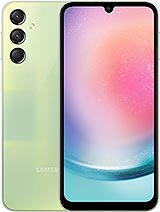
Samsung Galaxy M14

About Luqman
A passionate technology writer and digital researcher,Luqman specializes in simplifying complex tech trends into practical, user-focused insights. With a strong interest in smartphones, emerging gadgets, and digital ecosystems, Luqman delivers well-researched, unbiased content tailored for everyday users. From product deep-dives to buying guides, the goal is simple: help readers make smarter, more informed decisions in a fast-changing tech landscape.